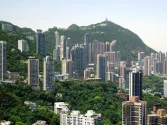
Data centres hit 95% occupancy as power grid freezes supply
CBRE report finds state planning rules confine all future infrastructure builds to Jurong Island.
Singapore's data centre market is operating at occupancy levels above 95%, with severe capacity constraints pushing demand to alternative Southeast Asian markets, including Johor, Kuala Lumpur, and Bangkok, according to CBRE's 2026 Asia Pacific Data Centre Trends and Outlook report published in May 2026.
The report describes Singapore as a landlord's market, with operators able to be selective on customer quality and suitability. Stronger, credit-worthy customers and those better aligned with operators' efficiency objectives command advantages in securing space.
New development in Singapore is heavily controlled geographically, with Jurong Island identified as the main area earmarked for future projects. Operators are finding it increasingly difficult to develop outside designated areas, and power availability is described as the principal development bottleneck beyond planning controls.
A separate report by JLL published in January 2026 said that nearly 100 GW of new data centres will be added between 2026 and 2030, doubling global capacity. The global data centre sector will likely expand at a 14% CAGR through 2030, which will require energy innovations to alleviate grid constraints. Hyperscalers will remain a key driver of sector growth, executing a dual strategy of leasing and self-building.
A similar report published by Mordor Intelligence in the same month valued Singapore’s data centre market size will grow from $5.83b (US$4.56b) in 2026 to reach $7.52b (US$5.88b) by 2031, at a CAGR of 5.22% during the forecast period.
Despite strong demand across co-location and hyperscale segments, upcoming capacity stands at only 247.5 MW against a live base of 821 MW as of Q1 2026. DC-CFA1 has delivered four awards of approximately 20 MW each, whilst DC-CFA2 is expected to provide at least 200 MW in total.
Even if additional capacity is approved, CBRE said it is unlikely to fundamentally loosen the market given expected rapid absorption and long lead times to delivery.
Low vacancy is expected to persist in the near term, with rents expected to trend stable to slightly upward through 2026.
Singapore is also rated High across all four development bottleneck categories in CBRE's scorecard, power constraints, construction costs, shortage of skilled labour, and community and environmental risks, the most constrained rating of any market in the region outside Korea.
On the investment side, activity is described as subdued, with assets remaining tightly held and owners unwilling to sell. The limited transactions that have occurred involve Keppel and CapitaLand moving assets between development platforms and REIT structures.
Yields have seen slight compression, with government support for artificial intelligence and a lack of large-capacity pipeline supply forcing investors to target existing stock, pushing up price expectations.
AI-readiness of existing stock is flagged as a growing concern, with many legacy facilities not designed for current AI workloads. CBRE noted this is creating opportunities around facility refresh, retrofit, energy optimisation, and sustainability-led upgrades.
Amongst selected market movements, Keppel has started construction on a 25 MW floating data centre project scheduled to go live in 2028 and is fully committed to a global hyperscaler. Digital Realty has pledged more than $4.35b (US$3.4b) for new data centre development in Singapore.
$1 = US$0.78



























 Read Here
 Advertise
 Sign Up