31% of Singaporeans commuted to work by MRT in 2010
However, those who used the public bus to commute to work declined from 25 percent to 19 percent.
According to the Census of Population 2010 released by Singapore Department of Statistics, between 2000 and 2010, the proportion of resident working persons who commuted to work by MRT increased. Those who used the public bus as the only mode of transport to work declined over the same period.
Geographic Distribution
Age Profile
In 2010, the proportion of elderly aged 65 years and over was highest among Singapore residents staying in Outram, Downtown Core, Rochor, Queenstown and Bukit Merah planning areas1 (15-19 per cent). The proportion of elderly was lowest among Singapore residents staying in Punggol (4.8 per cent).
Highest Qualification Attained
In 2010, the proportion with at least post-secondary qualification was highest among Singapore residents staying in the Singapore River planning area (86 per cent), Tanglin (85 per cent) and Newton (84 per cent). The corresponding proportion was lower among Singapore residents staying in older estates such as Rochor (41 per cent), Bukit Merah (41 per cent) and Outram (30 per cent).
Language Most Frequently Spoken at Home
The proportion who spoke English most frequently at home was highest among Singapore residents staying in Tanglin, Singapore River, Bukit Timah, Newton and River Valley planning areas in 2010 (67 - 75 per cent). In contrast, the proportion who spoke English most frequently at home was lowest among Singapore residents staying in Woodlands (23 per cent), Jurong West (20 per cent) and Outram (16 per cent).
Transport
Usual Mode of Transport to Work
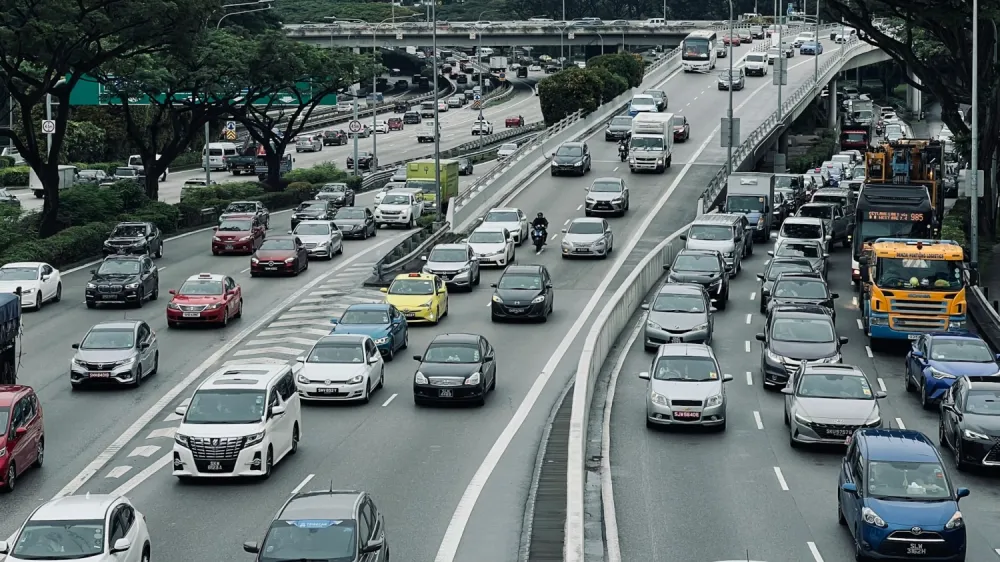
In tandem with the extension of the MRT network, the proportion of resident working persons who commuted to work by MRT only or MRT combined with another mode increased from 24 per cent in 2000 to 31 per cent in 2010. Those who used the public bus as the only mode of transport to work declined from 25 per cent to 19 per cent over the same period. The proportion of resident working persons who used the car as the only mode of transport to work increased slightly from 24 per cent in 2000 to 25 per cent in 2010.
Mode of Transport to Work by Planning Area
In 2010, the proportion of resident working persons who commuted to work by MRT only or MRT combined with another mode was highest among those staying in Sembawang (49 per cent), followed by Yishun, Woodlands and Choa Chu Kang (40-42 per cent). The proportion who used the public bus as the only mode of transport to work was highest among those staying in Bukit Merah (31 per cent), Marine Parade (29 per cent) and Bukit Panjang (26 per cent).
In contrast, the proportion of resident working persons who commuted to work by car only was highest among those staying in Tanglin (62 per cent), Bukit Timah (62 per cent), Mandai and Newton (50-53 per cent).
Travelling Time to Work
In 2010, the median travelling time to work was 30 minutes for resident working persons who commuted to work by car only. The median travelling time to work was also 30 minutes for those who commuted to work by public bus only.
Travelling Time to Work by Planning Area
Resident working persons staying nearer to the city generally had shorter travelling time to work. In 2010, the median travelling time to work was less than 25 minutes among resident working persons staying at the Downtown Core, Outram, Newton, River Valley, Tanglin, Changi and Singapore River planning areas. In contrast, the median travelling time to work was longest at 40 minutes for resident working persons staying in Choa Chu Kang, Bukit Panjang, Woodlands, Sembawang, Yishun, Sengkang and Punggol.
Usual Mode of Transport to School
Reflecting the close proximity of the schools to their homes, 46 per cent of the pre-primary and primary school students walked to school in 2010, unchanged from 2000.
MRT emerged as an important mode of transport to school for those attending higher education. Between 2000 and 2010, the proportion who commuted to school by MRT only or MRT combined with another mode increased from 33 per cent to 54 per cent for polytechnic students, and from 41 per cent to 56 per cent for university students.
Travelling Time to School
The median travelling time to school was 45 minutes for polytechnic students and 50 minutes for university students in 2010. In comparison, the median travelling time was shorter for pre-primary and primary, and secondary school students (12 minutes and 20 minutes respectively).

























 Read Here
 Advertise
 Sign Up