Singapore developers hampered by disjointed AI tools: survey
A survey found 96% of respondents use AI, but fragmented infrastructure is slowing deployment.
Nearly half of developers and technology leaders surveyed in Singapore cited constant context-switching between disjointed tools as the main source of friction in their workflows, according to Twilio.
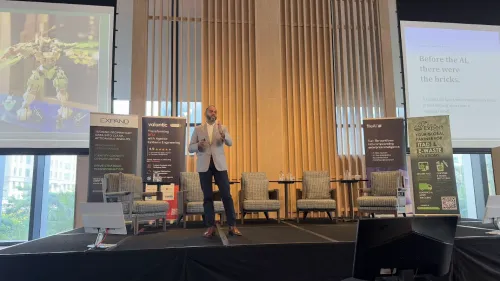
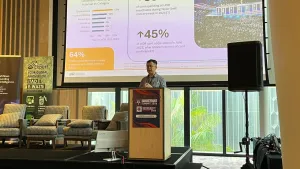
The survey, conducted amongst 196 respondents at API Days Singapore, found that 46% struggled with switching between disconnected tools. Another 35% cited incompatible tools, whilst 24% said they deal with siloed data across multiple disconnected systems.
Twilio said the findings show that AI adoption is no longer the main hurdle for organisations, as 96% of respondents already use AI tools in their daily workflows. About 90% of survey respondents were based in Singapore.
However, fragmented tooling, weak integration, and limited governance are preventing companies from scaling AI projects effectively.
Fewer than 30% of respondents said their companies have a clear strategic vision for AI deployment. Among founders and startup leaders, 41% said they are still testing AI without a formal adoption framework.
The lack of structure is also affecting production rollout. Twilio said 31% of organisations without a formal AI approach struggle to move AI initiatives into production, compared with 3% of those with a structured roadmap.
Team priorities also differ. About 61% of software engineers ranked API availability as an important factor when evaluating tools, compared with 36% of product managers, suggesting possible gaps between interoperability needs and product functionality preferences.
AI use is also moving into more complex applications, with nearly 40% of respondents already building autonomous agents and 25% integrating Voice AI to handle workflows using natural speech.
Michelle Duke, senior developer evangelist at Twilio, said running next-generation models on fragmented legacy architecture is becoming a liability.
“The missing link is the connective tissue between these isolated systems,” Duke said.
Twilio said organisations will need stronger infrastructure to connect teams, systems, and processes as AI shifts from simple information retrieval to task execution across enterprise platforms.






















 Read Here
 Advertise
 Sign Up