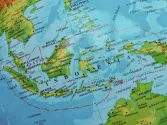
Defence minister urges flexible partnerships amidst evolving security landscape
The Defence Minister said traditional institutions must evolve with emerging risks.
Defence Minister Chan Chun Sing calls for more flexible, issue-based international partnerships as conflicts are increasingly crossing borders and involving economic, cyber, and information dimensions at the Shangri-La Dialogue on 31 May.
He said modern conflicts extend “beyond geography, beyond military firepower, and beyond the here-and-now,” noting that disruptions in one region can quickly affect global supply chains and critical infrastructure.
Chan said state competition now includes non-military tools such as economic leverage, information operations, and legal approaches used to influence global rules.
He also pointed to a “regulation paradox” in emerging technologies, where early rules risks slowing innovation and delayed action entrenching new threats.
International institutions and rules remain necessary but must be updated, he said, warning against a shift towards purely transactional global relations.
Weak norms, he said, would raise uncertainty, reduce investment, and undermine stability.
Chan cited the United Nations Convention on the Law of the Sea (UNCLOS) as an example of a legal framework supporting maritime order, including transit passage rights in key sea lanes.
He also highlighted strategic waterways such as the Strait of Hormuz, noting their importance for trade, energy and data flows and he also pointed to Singapore’s cooperation with Indonesia, Malaysia, and Thailand under the Malacca Straits Patrol as an example of regional coordination.
He said multilateral frameworks alone are insufficient and called for overlapping, issue-based partnerships to address emerging risks in areas such as artificial intelligence and cybersecurity.
Chan also cited Singapore’s work with the Netherlands and South Korea on AI governance discussions, as well as ASEAN cyber capacity-building through the ASEAN Defence Ministers’ Meeting Cybersecurity and Information Centre of Excellence, established in 2023.
He also referenced the Guiding Principles for Underwater Infrastructure Defence Exchanges (GUIDE), a 17-country initiative on subsea cable and pipeline protection.
He underscored domestic cohesion is critical to sustaining effective foreign policy, saying internal trust strengthens a country’s ability to engage externally and avoid short-term policymaking.
After the plenary session, Chan convened a second ministerial roundtable attended by 10 visiting ministers and representatives.
The discussions focused on emerging non-traditional and hybrid security risks, including misinformation, cyber threats and the protection of subsea infrastructure.
Ministers also exchanged views on the role of technological innovation in defence, ways to improve the efficiency of defence spending, and approaches to strengthening societal support for national security through broader “total defence” frameworks.
























 Read Here
 Advertise
 Sign Up