
AI hype exposes companies’ human knowledge gap
INSEAD’s Phanish Puranam says firms still rely on employee judgment despite rising AI adoption.
Companies risk weakening decision-making and accountability as businesses overestimate what artificial intelligence can currently achieve whilst underestimating the value of human judgment, institutional knowledge, and workplace culture.
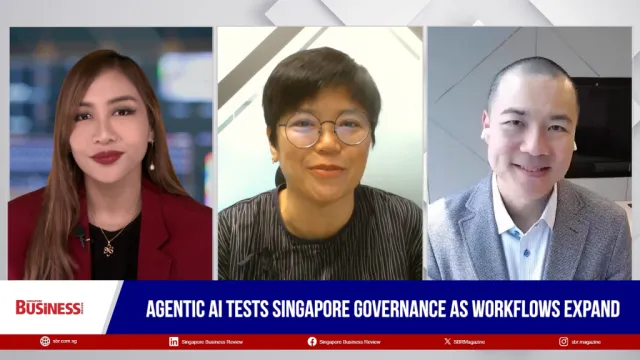
In an interview with Phanish Puranam, Professor of Strategy at INSEAD and Research Director of the INSEAD-Wharton Alliance, he said that many organisations are treating AI mainly as a productivity and cost-reduction tool without fully recognising the operational risks of removing people from decision-making processes.
The discussion highlighted concerns that firms rushing into automation could weaken long-term organisational capability if employees become detached from production, customer interaction, and evaluation processes.
Puranam described “re-humanising” organisations as creating workplaces where employees choose companies for reasons beyond salary alone.
“If two companies make a job offer to the same person and they are offering the same salary, but the person picks one company over another, it's for all the intangible, non-material benefits in addition to the salary,” Puranam said. “That's a measure of human centricity.”
According to Puranam, businesses still require strong employee engagement even as AI becomes more embedded across operations.
“As long as we still need human capital, even in the age of AI, and I strongly believe we do, you need to find ways of attracting, retaining, and engaging talent,” he said.
Puranam also argued many firms misunderstand the limitations of large language models despite increasing AI investment.
According to Puranam, enterprise AI systems still depend heavily on company-specific knowledge that often exists informally within employee experience rather than structured databases.
“Some of that data is in documents, but a lot of it is in people's heads,” he said.
Puranam said businesses face risks both from excessive reliance on AI and from refusing to adopt automation altogether.
He argued there is “no one-size-fits-all” answer because AI adoption depends on how companies compete. Cost-focused businesses may automate more aggressively, whilst firms dependent on empathy and customer interaction may require stronger employee involvement.
Looking ahead, Puranam said successful organisations may operate with fewer management layers, more autonomous teams, and stronger coordination between AI systems and employees. However, he warned companies relying on AI purely for efficiency gains risk weakening long-term competitiveness if human judgment is reduced too aggressively.
























 Read Here
 Advertise
 Sign Up







Commentary
Singapore’s global dispute fault lines
‘Tokenmaxxing’ – The wrong AI race to run in Singapore
To outsmart modern fraud, we must first know the enemy
Why Singapore SMEs cannot wait for quantum cyber risk to arrive before securing data
Is Singapore's emphasis on long-term security and stability hindering purpose-driven employees?
When Singapore's agentic AI ‘chefs’ arrive, will the kitchen be ready for them?
What Singapore’s app store rules reveal about the future of online trust