
AI literacy gaps expose Singapore firms to tool misuse
INSEAD’s Philip Parker says businesses risk misunderstanding AI beyond ChatGPT-style systems.
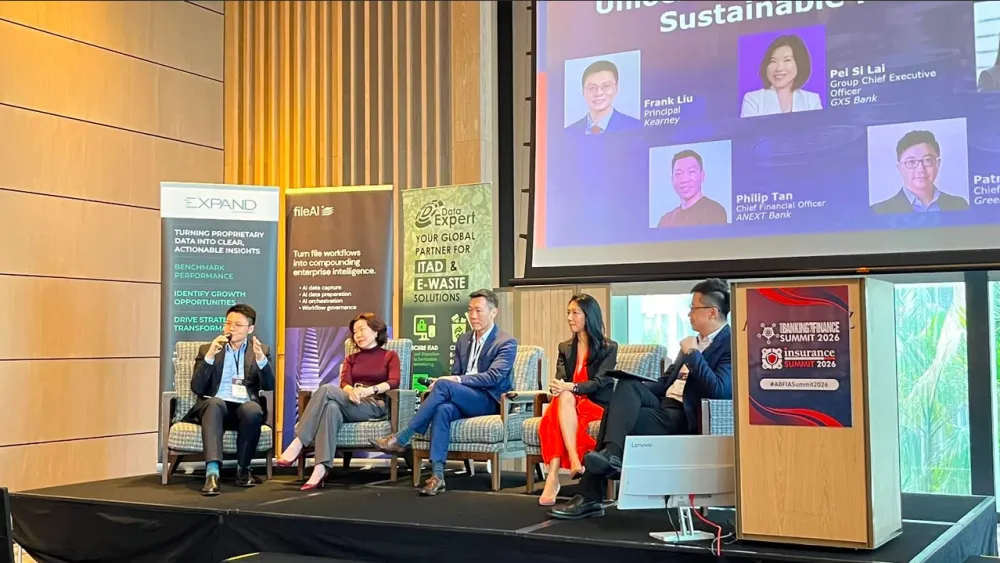
AI-supported platforms may become the dominant way people access information, but businesses still risk misunderstanding how artificial intelligence actually works, according to Philip Parker, Professor of Marketing and INSEAD Chaired Professor of Management Science.
Parker said many companies incorrectly associate AI only with ChatGPT-style systems, creating a wider literacy problem as businesses accelerate AI adoption across operations and decision-making.
“The general literacy is quite low across companies,” Parker said.
According to Parker, AI is broader than large language models and includes “four branches of AI,” including robotics, cognitive symbolic computing, deep learning, and machine learning control systems.
The discussion highlighted growing concern that businesses may overestimate AI-generated content without understanding how information is produced or validated.
“You have to think of these programs as data reduction,” Parker said. “They're reducing a lot of data and making it more palatable, but the data comes from somewhere, and that somewhere is still humanity.”
Parker said platforms such as ChatGPT and Claude primarily act as research and aggregation tools rather than independent creators of entirely new information.
“Our access to knowledge may actually be coming from AI-supported platforms,” Parker said. “We're getting our information from humanity.”
The discussion also focused on Botipedia, a platform Parker said was developed to reduce hallucination risks and improve data traceability inside enterprise systems.
According to Parker, Botipedia relies on natural language generation, or NLG, rather than large language model architecture. The system combines several analytical methods, including graph theory, econometrics, and geospatial models, instead of depending on a single AI engine.
The platform is designed to help organisations organise dispersed internal information without exposing sensitive data externally.
Parker said inaccurate AI-generated output could create operational and reputational risks if businesses rely too heavily on automated systems without human oversight.
Looking ahead, Parker said AI platforms could become the default way people access information within five to 10 years, but users may increasingly become platform creators themselves.
“You can generate your own chatbot. You can generate your own platform,” Parker said. “Right now, we're users of platforms, not generators of platforms.”


















 Read Here
 Advertise
 Sign Up







Commentary
Singapore’s global dispute fault lines
‘Tokenmaxxing’ – The wrong AI race to run in Singapore
To outsmart modern fraud, we must first know the enemy
Why Singapore SMEs cannot wait for quantum cyber risk to arrive before securing data
Is Singapore's emphasis on long-term security and stability hindering purpose-driven employees?
When Singapore's agentic AI ‘chefs’ arrive, will the kitchen be ready for them?
What Singapore’s app store rules reveal about the future of online trust