Driverless dreams: Singapore faces long robotaxi wait
Public trust, regulation, and technical limits remain major barriers.
Robotaxis are unlikely to become a common sight on Singapore’s roads within the next five years despite recent investments and ongoing trials, according to analysts.
Zafar Momin, an adjunct professor at the National University of Singapore Business School, said autonomous ride-hailing remains far from everyday use.
“I don't see anything happening in the next few years,” he told Singapore Business Review via Zoom. “We shouldn’t think of robotaxis as something where you're going to walk down the road and get one.”
He added that early deployments would stay limited to controlled areas such as university campuses, industrial parks, depots, and closed-loop precincts where traffic conditions can be tightly managed.
Andreas Nienhaus, a partner at Oliver Wyman, said Singapore’s safety-first regulatory framework also means an islandwide robotaxi network is unlikely to emerge within the five-year horizon.
“Singapore starts with fixed-route autonomous shuttling before expanding into real everywhere, every time robotaxis,” he said in a separate Zoom call. “It will take more than five years.”
Public trust remains a central barrier. “How would you like to sit in a vehicle that doesn't have a driver, especially if you know that such vehicles have had accidents?” Momin asked.
Both noted that Singapore continues to review incidents overseas, including accidents and service suspensions in the US and China that triggered public pushback. They said confidence must be firmly established before authorities consider wider deployment.
Liability is another unresolved issue. Momin said regulators have yet to determine liability in a collision. “Whom do you sue? Do you sue the software company or the hardware company or the operator?” he asked.
Technical constraints also remain. Dense traffic, unpredictable road behavior, narrow lanes, and frequent heavy rain create a far more complex operating environment than in many Western testbeds.
Nienhaus said Southeast Asia offers limited scale for commercial robotaxi operations. Few cities have the infrastructure, mapping systems, or regulatory readiness required for large fleets, making it hard for operators to achieve the scale needed to lower costs.
Even so, both analysts see long-term opportunities in autonomous software, system development, and controlled-route transport services.
In August, Grab Holdings announced plans to take an equity stake in Chinese autonomous-driving firm WeRide by mid-2026 to accelerate the rollout of Level 4 robotaxis and shuttles in Southeast Asia.
Momin said startups focused on autonomous driving software, such as Pony.ai, might see increased demand. He added that public transport authorities could expand the use of driverless shuttles for first- and last-mile trips to MRT stations.
Nienhaus said Singapore’s strategy is meant to complement, not replace, public transit. “You can try to increase accessibility to public transit through last-mile shuttling, and that’s exactly what Singapore is currently doing,” he said.
He also cautioned against expectations of cheap robotaxi fares. “If you look at other players around the world, they’re not as cheap. You need massive scale to drive down costs.”
Singapore’s regulatory framework is amongst the most detailed globally. Whilst some industry players say the bar is high compared with the US, Nienhaus noted that the public supports the safety-focused approach.
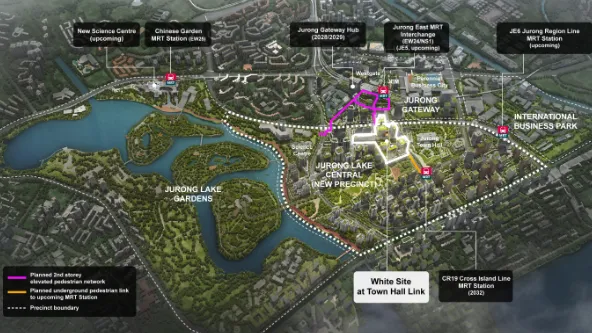
Momin said Singapore remains well prepared, citing long-running autonomous vehicle trials at Nanyang Technological University and in Jurong. The government in July formed a 17-member steering committee on autonomous vehicles (AV) to guide the safe integration of AVs and strengthen connectivity.
For now, analysts said robotaxis would not reshape Singapore’s transport workforce or displace drivers. “Robotaxis are not going to be mainstream anytime soon,” Momin said.
Nienhaus added that autonomous fleets still require significant human support, meaning the technology is more likely to create jobs in the near term than threaten them.


















 Read Here
 Advertise
 Sign Up