What will happen when an earthquake hits Singapore?
I believe Singapore will eventually experience a severe earthquake. I’m not a pessimist; I’m a realist. You can't live 400 hundred kilometers from a major earthquake fault and say there is no risk of earthquake.
The kitchen drawers in my 23rd floor Singapore home rolled open by themselves in the “tremor” from Sumatra in February 2008. That was a 7.0 magnitude earthquake. What happens after one that’s 8.0? Or 9.0, like Fukushima?
You understand that 9.0 is one hundred times stronger than 7.0, right?
As an organizational resilience professional, I would expect these consequences in Singapore:
• Civil Defense focused on high-priority locations. Ambulances simply unavailable
• Damaged office towers too risky to re-enter, and BCA inspectors overwhelmed
• Hundreds of employees and customers injured by falling glass
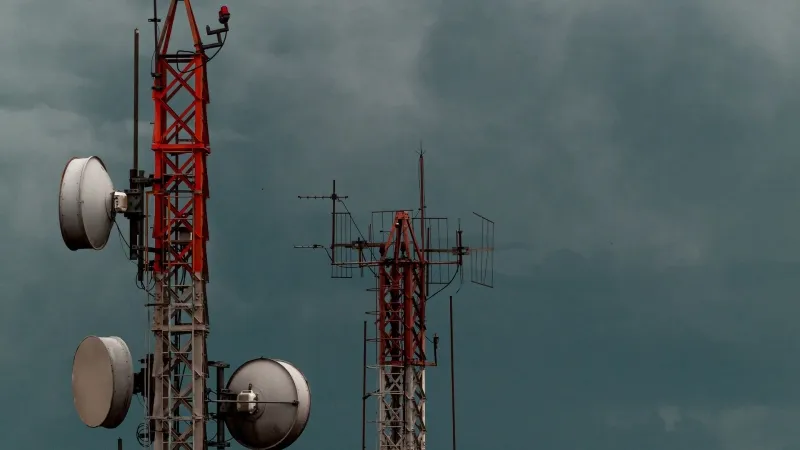
• Broken telecom lines and jammed mobile circuits
• Collapsed or buried segments of MRT track, and impassable road surfaces
• Damaged water, sewer and electric power lines
• Thousands of people trying to acquire drinking water
• Toilets that flush once but don’t refill
• Panic cash withdrawals from ATMs, only some of which will be functioning
What should your company do?
Employees will expect their companies to be able to help them. After the 2004 tsunami, for example, relatives of people missing in Thailand called their employers, not the Phuket police. Suppose your switchboard got this call: ‘My spouse works at your company. Can you tell me where she is and if she’s OK?’ Would you really want to answer, “No.”?
That’ll be your answer if your company hasn’t made even basic preparations for a crisis, emergency or business interruption. And you can expect to spend some money afterward on lawyers defending your directors from charges of negligence by your shareholders or customers.
Assuming your company has a business continuity plan or an environment, health & safety department:
1. Set up a call ‘pool’ – a phone number that employees can call to report their situations, 24x7. The standard notification call ‘tree’ is a cumbersome chain that depends on one employee calling others. It won’t work after an earthquake. Instead, make each employee responsible for contacting the company at the designate ‘pool’ number. Then focus your follow-up efforts on those who don’t call.
2. Have multiple communication channels to reach your company’s audiences: employees, customers, suppliers, regulators, the press and social media. Remember, they’ll want a dialogue with you, not a monologue from you. Find someone in your company who knows how to ‘blog’; it’s free, fast and effective. And it can be done from anywhere.
3. Offer all employees training in cardiopulmonary resuscitation (CPR), automatic external defibrillator (AED) and First Aid. At company expense, to demonstrate your sincerity.
4. Forget “fire” wardens squirting foam on imaginary fires. Wardens have genuinely critical responsibilities: evacuation, escape, assembly and accounting for all employees and visitors ("EEAA") as quickly as possible. Important training tip: practice, practice, practice.
5. Help human resources staff learn how to notify next-of-kin of death and injury. It isn’t easy; just ask a doctor. The rule is: in time, in pairs, in person, in plain language, with compassion.
6. Form a volunteer crisis intervention team and train them to provide ‘psychological first aid’ to their colleagues, individually and in groups, after the event.
7. In the near future, assess the impact on your business of an earthquake – or a flood, fire, power outage, infectious disease, bomb threat or any other ‘hazard’. How soon would you want to resume each function and how many people would it take to each one? There’s even a Singapore Standard for that assessment process.
Of course, all these are easier to do before a disaster than after it. If you don’t prepare, you’ll just wing it as well as you can. Good luck! While you’re improvising, companies that are better prepared than yours may be welcoming your former customers.
Nathaniel Forbes, Director, Forbes Calamity Prevention



















 Read Here
 Advertise
 Sign Up